
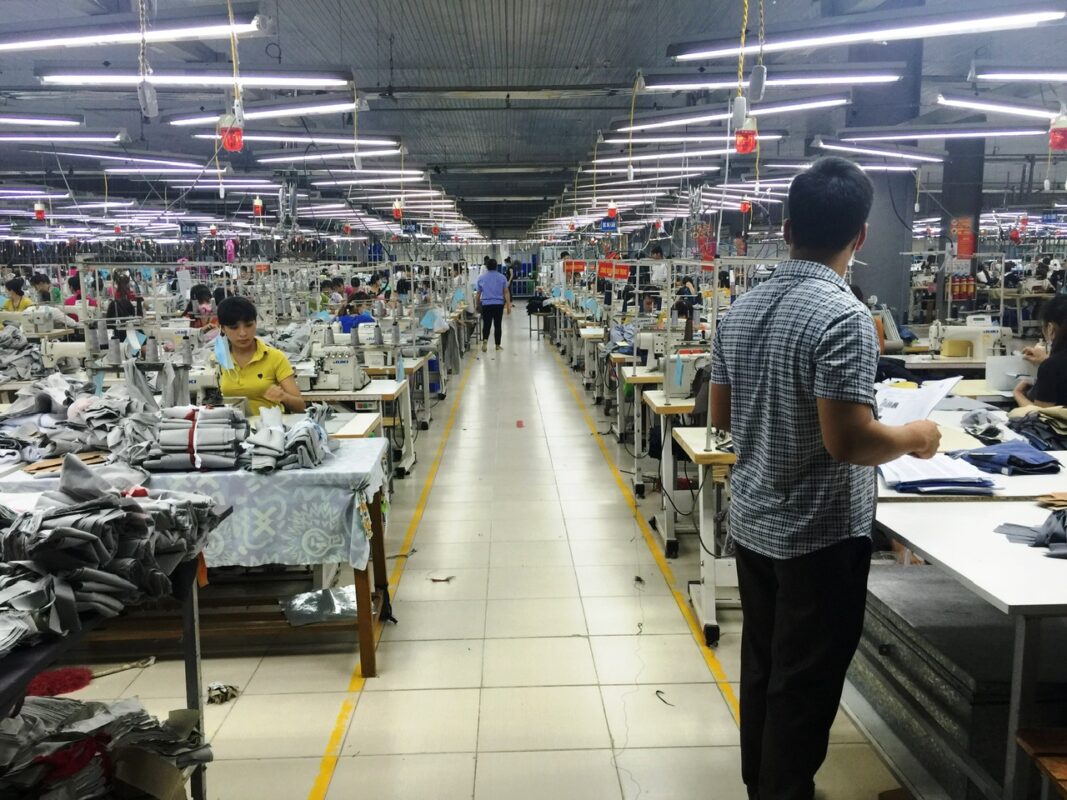
The adjustments in the U.S. tariffs are poised to reshape Vietnam’s textile, clothing and footwear industry, prompting businesses to reassess their strategies and operations, write Assoc. Prof. Rajkishore Nayak and Corinna Joyce from the Fashion Enterprise program at RMIT University Vietnam.
Higher tariffs threatening a mainstay sector
The textile, clothing and footwear (TCF) sector plays a significant role in the economic growth of Vietnam, consistently ranking among the top industries for export revenue and labour demand.
Last year, the combined export turnover of Vietnamese TCF products surpassed $71 billion, a 10-11% year-on-year rise. Of that total, over a third was headed for the U.S., followed by other major markets such as Japan, the EU, South Korea, China, and ASEAN.
Pricing, reliability, favorable government policies, flexibility, and timely delivery have significantly contributed toward the rapid growth of the TCF sector in Vietnam. Further, factors such as political instability in competing countries like Bangladesh and Myanmar, and high domestic demand in Vietnam, have benefitted the sector.”
The Vietnamese textile and clothing industry is targeting an export turnover of $48 billion this year, while the footwear and leather sector has set a goal of $29 billion. However, the recent adjustments in the U.S. tariff rates have raised concerns.
Starting from April 5, 2025, all Vietnamese TCF products exported to the U.S. have been levied an additional 10% tariff. This is creating imbalance in the trade dynamics of Vietnam as the average tariff has increased three times from 5% to 15%.
After 90 days, if the “reciprocal” tariffs are further increased by 46%, the new rate will exceed 51% (depending on the product type), which is a 10-fold increase from the current rate. What’s more, this will affect all industries in the TCF manufacturing sector, including apparel clothing, home furnishing, footwear, activewear, performance wear, and automotive textiles.
Vietnam’s TCF sector excessively rely on foreign suppliers in mainland China, Hong Kong and South Korea for raw materials such as fabrics and trims. For example, in 2023 the total import value of fabrics was $13.2 billion, which is equal to more than 33% of the total export value. Further, Vietnam’s heavy reliance on only a few exports markets (U.S. being the number one) is vulnerable to tariff changes and geopolitical shifts.
Assoc. Prof. Rajkishore Nayak from RMIT’s Bachelor of Fashion (Enterprise) program highlights that despite Vietnam’s involvement with 17 international free trade agreements (FTAs), there is no FTA with the US except the bilateral trade agreement.
The tariff increase will thus dampen the price competitiveness of Vietnamese goods heading to the U.S. market, making them less attractive compared to products from India and Bangladesh, which enjoy lower tariffs. However, Vietnam will have a competitive advantage over its neighboring countries, Cambodia and Laos, with tariff rates of 49% and 48%, respectively.
The escalation in tariffs will likely result in higher product prices and a decline in export volume, potentially contributing to inflation. It will disrupt the supply chain dynamics of Vietnamese TCF producers, and U.S.-based brands importing from Vietnam will likely seek alternate suppliers from other countries.
In addition, the situation may create a cascading impact on various industries that depend on Vietnamese materials for value-added production, including in the U.S.
Measures to tackle the problem
In response to the escalating threat of increased tariffs from the U.S., the Vietnamese TCF sector faces a critical juncture – one that requires immediate action as well as a mid-to-long-term shift to build higher resilience to external threats.
The tariff change indicates that the Vietnamese TCF sector should change towards self-reliance on raw materials, develop ethical production processes, invest in automation and AI, diversify product ranges, and look for alternate markets in Asia, Oceania, and the EU.
In order to lessen its reliance on the U.S. market, the Vietnamese TCF sector should prioritize long-term strategic objectives that include diversification of export markets and products, investment in technology, green manufacturing, and a focus on sustainable product offerings.
Industry associations from both the U.S. and Vietnam are implementing short-term relief measures while laying out policies for the long run. Some have expressed commitment to increasing cooperation and support aimed at supply chain transparency and compliance with the U.S. policies.
According to an association representing U.S. cotton in Vietnam, their efforts are currently focused on supporting the textile and garment industry in understanding the advantages of U.S. cotton through business networking events, technical services, and sustainability and traceability platforms.
Meanwhile, the Vietnam Textile and Apparel Association (VITAS) reported early supply chain disruption when the tariffs were first announced. The 90-day delay in implementation offered relief and gave the industry time to adjust.
Currently, brands, producers, and manufacturers are actively expediting shipments to maximize opportunities during this critical window. This period has also allowed stakeholders across the supply chain to strengthen coordination, optimzse operations, and reinforce their commitment to timely delivery. The industry remains proactive, resilient, and focused on maintaining strong relationships with international partners while adapting to the evolving trade environment.
To offset the impact of tariffs, businesses could also focus on local market promotion and diversify their product lines to tap into rising consumer demand across ASEAN. For manufacturers, targeting regional brands in the wider Asian market and bringing production closer to the consumer base present a viable path for market expansion and diversification.
Regarding mid-to-long-term strategies, investments in skill development as well as technological advancements are imperative to elevate the sector’s capabilities and drive resilient growth. Various technologies, such as radiofrequency identification (RFID), automation, robotics, AI, blockchain, and isotope testing, can be useful. However, implementing these technologies will require initial investment, infrastructure, and skilled personnel for operation and maintenance.
Embracing greener production practices and obtaining certifications – such as those required by the EU’s General Product Safety Directive (GPSD) and the REACH Regulation – can also differentiate Vietnamese products. By meeting the strict standards for safety, chemical use, quality, and labelling posed by the EU and other countries, Vietnam can increase export volumes to those markets.
Finally, negotiations will play a crucial role in the 90-day period. While Vietnamese government leaders negotiate with their U.S. counterparts, TCF manufacturers should negotiate with their buyers to find the best solutions to maintain orders, minimising revenue and job losses.
Source: The Investor
